
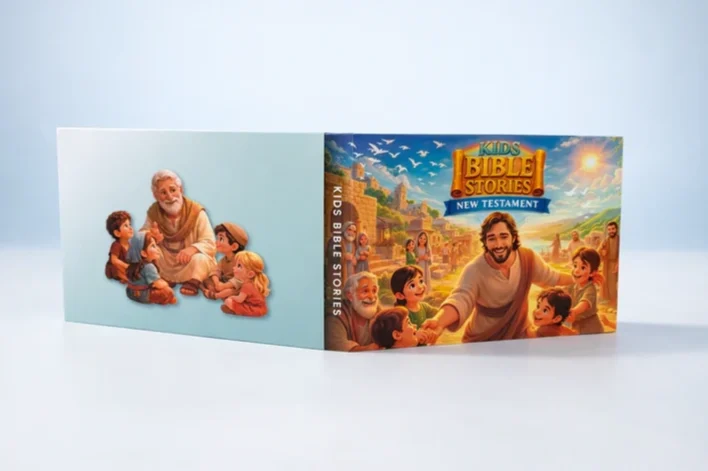
Many parents are not aware of how important it is to be involved in their child’s spiritual development until their child is much older. However, every Child develops their values, emotional patterns, and worldview by age six. This does not just come from personal experience but is also supported by many scientific studies in child development. When a child has good basic values to begin with, they will have a much better chance of functioning positively in life. If you are a parent or teacher considering when to begin teaching Bible stories for kindergarteners, you need to start right now.
We work with many families at The Kids Bible Stories and have seen firsthand how much of a difference it makes.
What the Research Shows About Early Faith?
The Six-Year Window Nobody Talks About
Northwestern College’s early childhood education research puts it plainly: a child’s spiritual foundation and worldview form within the first six years of life. That’s a narrow window, and most of it passes before formal schooling even begins.
What fills that window matters enormously. Children who engage with Bible stories during these years develop greater empathy, stronger communication skills, and a more grounded sense of right and wrong. These aren’t soft, feel-good outcomes. Researchers measure them, and the data consistently support early faith engagement.
A Moral Compass That Forms Naturally
Covenant Schools’ research on faith and child development found that children develop an internal compass for right and wrong in their early years.
The reason Bible stories for kindergarteners work so well here is simple. Young children don’t learn from lectures; they learn from stories. A five-year-old who hears about the Good Samaritan understands kindness in a way no classroom discussion about “being nice” ever achieves.
Why Bible Stories for Kindergarteners Hit Differently?
Their Brains Are Built for This
The way that kindergarten children process information is unique to them. They use story-based interactions with characters as the basis for their understanding of how things work.
To five-year-olds Noah and David, Esther and Joseph are not just names. They are people who lived many years ago and are dealing with the same issues, and the emotional connection that makes the lesson stick. We build every story at The Kids Bible Stories around this reality, language that a kindergartner actually understands, and emotions they recognize.
Something Else Happens Too: Emotional Security
Children who hear regularly about God’s nurturing presence and love every day will develop their own quietude while remaining extremely vital. An established set of emotional supports within themselves through their trust in God’s love.
The emotional experience of knowing that you are loved, no matter what is happening around you, deeply affects how you come to school every day.
Preschool Bible Stories: Start Early
Start With the Simple Ones
Preschool bible stories don’t need to carry theological weight. They just need to be engaging, visual, and warm. Noah’s Ark, the Creation story, and Baby Moses work beautifully with 3 and 4 year-olds because they involve animals, wonder, family, and clear emotion.
The goal at this age isn’t comprehension. It’s familiarity and feeling. A child who has heard these stories a dozen times before kindergarten arrives with a head start, the characters feel like old friends, and the values have already begun to settle in.
A Side Benefit Most Parents Don’t Expect
Bible stories for preschoolers, vocabulary, sequencing, auditory discrimination, and biblical narratives develop the following areas:
Preschoolers are more likely to develop stronger skills in these areas when they are consistently exposed to Bible stories for kindergarteners. It is thus clear that there is a strong link between spiritual development and academic development in preschoolers. And also between spiritual development and academic success in kindergarten.
Kindergarten Bible Lessons Start Here
Bridge Between Story and Real Life
Something shifts between ages four and six. A child who previously just enjoyed a story starts asking what it means, and more importantly, starts connecting it to their own life.
That shift is exactly what kindergarten Bible lessons are designed to address. A six-year-old can understand that the patience Joseph showed in difficult circumstances applies to the frustration they felt on the playground yesterday. Esther’s courage to speak up connects to telling the truth when it’s easier not to.
This is where Bible stories stop being tales and start being a personal guide, and it happens most naturally during the kindergarten year.
Consistency Is the Secret Ingredient
One Bible story told once creates a memory. Bible lessons recur consistently throughout a full school year, creating a framework for how a child sees the world.
Teachers who consistently weave Bible stories can see measurable positive impacts, not just spiritually, but in student behavior and classroom culture overall. The Kids Bible Stories are organized to support exactly this kind of steady, progressive engagement across the full school year.
Making Bible Stories Actually Land
Read It More Than Once
Young children don’t get bored with stories the way adults do. Repetition is how they learn. Reading the same story over several days, then asking a child to retell it in their own words, and then connecting it to something that happened in their week. This three-step process moves a lesson from something heard into something owned.
Add Something Hands-On
A craft, a drawing, a short walk looking for things from the Creation story, anything that brings the lesson into the physical world, deepens retention. Words reach one part of the brain. An activity reaches several more.
Talk Like a Human, Not a Textbook
The biggest mistake adults make when sharing Bible stories with young children is using language the child can’t connect with. Keep it conversational, and keep it warm. Use words they already know. Theology can grow more complex as people get older. Right now, connection matters most.
The Investment That Keeps Paying
A child who grows up with Bible stories doesn’t just remember the stories. They remember how it felt to hear them.
Start now. Stay consistent. The foundation you build in these early years lasts longer than you’ll ever fully see.
Browse our full story library, including age-appropriate bible stories for kindergarteners, Bible stories for preschool, and Bible lessons, at The Kids Bible Stories.
