
Every business today faces mounting pressure to deliver AI-driven insights that keep pace with customer expectations and competitive dynamics. From personalized product suggestions to intelligent content curation, recommendation systems have become essential infrastructure. Yet for many teams, the path to deploying these capabilities has been blocked by prohibitive costs and daunting complexity. Building custom machine learning models demands specialized talent, expensive compute resources, and months of development time—luxuries that lean, agile teams simply cannot afford.
A fundamental shift is now underway. Low-cost LLM APIs are emerging as a viable alternative to traditional model deployment, offering powerful inference capabilities without the overhead of building from scratch. This article provides business analysts with a clear, actionable comparison between these two approaches. You’ll discover how to evaluate total cost of ownership, understand implementation timelines, and leverage real-time inference for personalized recommendations. Whether you’re exploring cost savings, seeking faster deployment cycles, or looking to unlock capabilities like instant personalization that were previously out of reach, this guide maps the practical path forward.
The Traditional Landscape: Building and Deploying Recommendation Models
Traditional recommendation systems typically fall into two categories: collaborative filtering, which identifies patterns across user behavior to suggest items similar users have engaged with, and content-based systems, which match item attributes to individual user preferences. Both approaches require teams to build, train, and maintain models entirely in-house.
The development lifecycle for these systems is extensive. It begins with data collection and cleaning—often the most time-consuming phase—followed by feature engineering, model selection, and iterative training cycles. Once a model achieves acceptable accuracy, teams must provision infrastructure for serving predictions at scale, configure monitoring pipelines, and establish retraining schedules to prevent model drift. Each stage demands dedicated engineering resources and careful coordination across data science, DevOps, and product teams.
The financial burden compounds quickly. GPU clusters for training, cloud compute for inference serving, and the salaries of machine learning engineers and data scientists represent significant ongoing expenditure. Scaling these systems to handle traffic spikes or expanding to new product lines multiplies costs further. Beyond budget concerns, traditional systems struggle with adaptability. Updating a collaborative filtering model to incorporate new user signals or product categories often means retraining from scratch, creating delays that prevent real-time personalization. For agile teams operating with constrained budgets and tight delivery timelines, these barriers effectively lock them out of deploying competitive recommendation capabilities, forcing reliance on simplistic rule-based approaches that fail to meet modern user expectations.
Enter Low-Cost LLM APIs: A New Paradigm for Inference
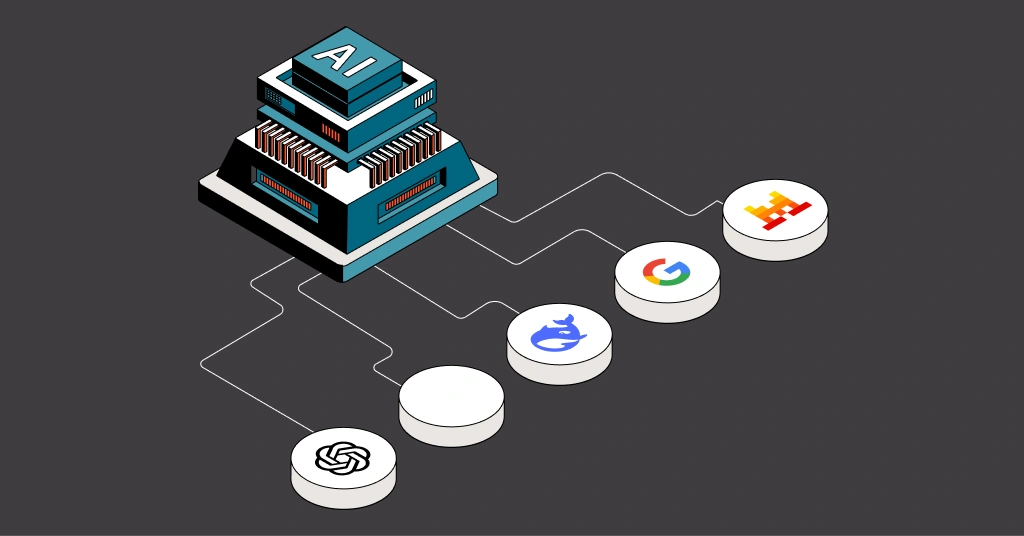
Low-cost LLM APIs deliver large language model inference as a managed service, allowing any team to send structured requests and receive intelligent outputs without owning or operating the underlying infrastructure. Providers like SiliconFlow host state-of-the-art models on optimized hardware, exposing capabilities through simple REST endpoints that any application can call. The result is that sophisticated natural language understanding—previously accessible only to organizations with dedicated ML teams—becomes available to anyone who can write an API request.
The pricing model fundamentally changes the economics of AI adoption. Instead of committing capital to GPU clusters and engineering headcount, teams pay per token processed or subscribe to tiered plans that scale with actual usage. This eliminates upfront investment risk and transforms AI capability from a fixed cost into a variable one that aligns directly with business value generated. A team can experiment with recommendation logic for pennies before committing to production-scale deployment.
For business analysts specifically, this paradigm removes the dependency on engineering bottlenecks. Analysts can prototype recommendation workflows directly—structuring prompts that encode business rules, testing outputs against known-good recommendations, and iterating in hours rather than quarters. Integration into existing dashboards, CRMs, or marketing platforms requires only standard API connectivity, not custom ML pipelines. The instant scalability of these services means a prototype that works for ten users scales to ten thousand without architectural changes, enabling rapid validation of AI-driven strategies before formal engineering investment.
Beyond Cost: Capabilities for Real-Time Answers and Personalization
LLM APIs process requests synchronously, returning results in milliseconds to seconds depending on complexity. This enables genuine real-time inference—when a customer browses a product page, submits a support query, or triggers a business event, the system can generate contextually relevant recommendations or answers immediately rather than relying on pre-computed batch predictions. Customer support teams can surface instant, context-aware responses drawn from product catalogs and user history simultaneously.
What distinguishes LLMs from traditional recommendation engines is their deep contextual understanding. A collaborative filtering model knows that users who bought item A also bought item B, but it cannot reason about why or adapt to nuanced preference signals expressed in natural language. LLMs can interpret a customer’s stated preferences, recent browsing context, seasonal relevance, and even sentiment to craft recommendations that feel genuinely personalized. They handle the long tail of complex, ambiguous requests—like “something similar but more formal for a winter event”—that rigid rule-based systems simply cannot parse, delivering personalization that matches human curatorial judgment at machine speed.
Head-to-Head Comparison: Cost, Performance, and Implementation
When evaluating Total Cost of Ownership, the contrast is stark. A traditional recommendation system typically requires $150,000–$500,000 in first-year costs when accounting for engineering salaries, GPU infrastructure, data pipeline tooling, and ongoing maintenance. Low-cost LLM APIs, by comparison, can deliver equivalent recommendation capabilities for $500–$5,000 monthly at moderate scale, with costs scaling linearly alongside actual query volume rather than requiring upfront capacity provisioning.
Time-to-market represents perhaps the most decisive differentiator. Traditional builds follow a 3–6 month development arc before delivering initial production value, factoring in data preparation, model iteration, and infrastructure hardening. LLM API implementations routinely move from concept to functional prototype within days, reaching production-ready status in two to four weeks. This compressed timeline means business teams can validate hypotheses and demonstrate ROI within a single sprint cycle rather than waiting multiple quarters.
On performance, traditional models excel at narrow, well-defined tasks where training data is abundant and user behavior is predictable—achieving high precision for straightforward “users who bought X also bought Y” scenarios. LLM APIs outperform on nuanced, context-rich requests that require reasoning across multiple signals simultaneously. Latency profiles differ as well: batch-oriented traditional systems deliver pre-computed results instantly but cannot adapt to in-session behavior, while LLM APIs generate fresh recommendations in 200–800 milliseconds, enabling true real-time personalization that responds to evolving context. For model updates and flexibility, traditional systems require retraining cycles measured in days or weeks, whereas LLM API behavior can be adjusted immediately through prompt refinement—no redeployment necessary.
Implementing Low-Cost LLM APIs: A Step-by-Step Guide for Business Analysts
The implementation process begins with mapping the user journey to identify where AI-driven recommendations create the most value. When a customer performs an action—browsing a category, completing a purchase, or submitting a query—that event triggers an API call containing relevant context: user history, current session data, and business rules. The LLM processes this payload and returns structured recommendations that your application renders within the existing interface, whether that’s a dashboard, storefront, or CRM record. This event-driven architecture means insights arrive precisely when they matter, embedded naturally in the workflow rather than siloed in a separate analytics tool.
To leverage AI for personalized recommendations, start by defining your recommendation criteria in plain language—what constitutes a good suggestion for your specific use case. Next, structure your prompts to include the user’s profile attributes, recent interactions, and any constraints (inventory availability, margin thresholds, compliance requirements). A conceptual workflow looks like this: your application assembles a prompt such as “Given this customer’s purchase history of [items], browsing session focused on [category], and stated preference for [attribute], recommend three products that maximize cross-sell potential while maintaining relevance.” The API returns ranked suggestions with reasoning, which your integration layer parses and displays within your CRM or marketing automation platform.
Effective prompt engineering for business analytics requires specificity and structure. Include explicit output format instructions—request JSON with fields for item ID, confidence score, and rationale. Provide few-shot examples showing ideal recommendation outputs so the model calibrates to your quality standard. Iterate on prompts using a test set of known-good recommendations, measuring alignment before scaling to production traffic.
Critical considerations deserve attention throughout implementation. Ensure customer data passed to the API complies with your privacy policies and any applicable regulations—anonymize identifiers where possible and review your provider’s data retention terms. Validate every API output programmatically before surfacing it to users; implement guardrails that flag recommendations falling outside expected parameters. Finally, deploy A/B tests comparing LLM-generated recommendations against your existing approach, measuring click-through rates, conversion lift, and customer satisfaction to quantify actual business impact before expanding coverage.
Overcoming Challenges and Future Outlook
Low-cost LLM APIs are not without trade-offs. Sending customer data to third-party endpoints raises legitimate data sovereignty concerns, particularly in regulated industries. At massive query volumes—millions of daily requests—per-token costs can eventually approach or exceed the economics of self-hosted infrastructure. Vendor lock-in also presents risk: building core recommendation logic around a single provider’s API creates dependency on their pricing stability, uptime guarantees, and model availability.
Mitigation strategies exist for each concern. Implement data minimization practices by passing only anonymized, aggregated signals rather than raw personal data. Negotiate committed-use pricing tiers as volume grows, and architect your integration layer with provider-agnostic abstractions so switching between APIs requires configuration changes rather than rewrites. Maintain prompt libraries and evaluation test sets independently of any single vendor to preserve portability.
Looking ahead, LLM API capabilities will continue expanding while costs decline—a trajectory consistent with every prior wave of cloud infrastructure commoditization. Expect tighter native integrations with business intelligence platforms, fine-tuning options that let teams customize model behavior without full training cycles, and hybrid architectures that blend API-based inference with lightweight local models for latency-sensitive or privacy-critical workloads. For business analysts, this evolution means increasingly direct control over AI-driven recommendation strategies without engineering intermediaries.
Empowering Business Analysts to Deploy AI-Driven Recommendations
Low-cost LLM APIs represent a genuine inflection point in how organizations deploy recommendation intelligence. What once required dedicated machine learning teams, months of development, and six-figure infrastructure investments is now accessible through a straightforward API call that any business analyst can prototype and validate independently.
The advantages over traditional methods are decisive across every dimension that matters to agile teams. Costs drop from hundreds of thousands to hundreds of dollars during initial deployment. Timelines compress from quarters to days. Capabilities expand from rigid pattern-matching to nuanced, context-aware personalization that responds to real-time signals and natural language complexity. These aren’t incremental improvements—they fundamentally redefine who can build and deploy competitive recommendation systems.
The implementation path outlined here gives business analysts a concrete framework for action: identify high-value touchpoints, structure effective prompts encoding business logic, integrate outputs into existing platforms, and validate impact through rigorous A/B testing. Each step is achievable without waiting for engineering capacity or budget approval cycles. As these APIs continue maturing—becoming cheaper, faster, and more deeply integrated with business intelligence ecosystems—analysts who build fluency now position themselves at the center of their organization’s AI-driven decision-making capability, turning data into personalized action at a pace that traditional approaches simply cannot match.
