
Your outdoor space should feel like a sanctuary for every member of your family, and that includes your four-legged companions. Designing an area that works for both you and your pets takes some thoughtful planning, but the payoff is worth it. When you focus on safety, comfort, and functionality, you create a backyard where quality time together becomes effortless. The secret is understanding what your pet naturally needs while keeping the aesthetic and practical elements that matter to you.
Prioritizing Safety and Security in Your Outdoor Design
Safety has to come first when you’re creating a pet-friendly outdoor space, well before you think about comfort features. Start by walking your property line and checking every inch of fencing for gaps, weaknesses, or escape routes that clever pets might exploit. Your fence height and material should match your pet’s size and jumping ability, you might be surprised how high some dogs can leap or how quickly they can tunnel underneath. Take time to identify and remove toxic plants from your landscaping, since many popular ornamental varieties can harm curious pets who like to nibble.
Water features need special consideration when pets share your outdoor areas. If you have a pool, think about installing a fence or safety cover to prevent accidents, especially for pets who are not natural swimmers. Store garden chemicals, fertilizers, and pesticides in locked containers well away from areas where pets spend time. Keep sharp tools, lawn equipment, and decorative items with small parts secured when you are not actively using them.
Selecting Appropriate Ground Surfaces for Pet Comfort
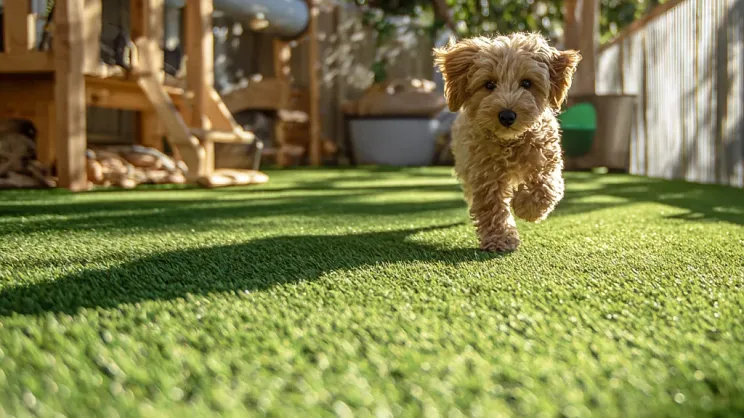
The surface materials you choose make a huge difference in your pet’s comfort and how much maintenance you will face. Traditional grass lawns often struggle under the wear and tear from active pets, developing bare spots, muddy patches, and discolored areas from urine. You need alternatives that can handle heavy use while staying comfortable underfoot and easy to clean. For pet owners who want pristine outdoor spaces year-round, pet turf offers durability and drainage that natural grass simply cannot provide. These surfaces resist digging, stay green regardless of season, and can be easily rinsed clean of waste and debris.
Different areas of your yard might work better with varied surface materials depending on what happens there. Gravel or decorative stone excels in designated potty areas because it drains well and can be sanitized regularly. Just avoid sharp-edged stones that could hurt sensitive paw pads or pose a choking hazard if swallowed. Smooth pavers or concrete create comfortable pathways for both humans and pets while clearly defining how traffic flows through your space.
Creating Comfortable Shelter and Shade Options
Proper shelter protects your pet from weather extremes while letting you enjoy outdoor time without constant anxiety. Dogs and cats can develop heat exhaustion, sunburn, and dehydration when they spend too long in direct sunlight. Install several shaded zones throughout your yard using pergolas, shade sails, or existing tree coverage. These structures pull double duty by creating pleasant spots where you can relax while protecting your pets from harsh UV rays.
Permanent shelter structures give pets a sense of security and somewhere to retreat when they need privacy or weather protection. A well-designed dog house should fit your pet comfortably, sit slightly elevated off the ground to prevent moisture problems, and face away from prevailing winds. Any shelter needs good ventilation to prevent dangerous heat buildup during warm weather. For cats who venture outdoors, enclosed structures with multiple exits provide safety from predators while satisfying their natural need for escape routes.
Incorporating Water Access and Pet-Friendly Amenities
Fresh water availability is not optional, it is essential for keeping your pet comfortable and healthy during outdoor activities. Set up multiple water stations around your yard to encourage proper hydration, especially when weather gets warm. Heavy, tip-resistant bowls work far better than lightweight options that get knocked over during play. Automatic water fountains designed for outdoor use appeal to many pets who prefer flowing water over still water in bowls.
Beyond meeting basic needs, thoughtful extras significantly boost how much your pet enjoys being outside. Create a designated digging zone filled with sand or loose soil where dogs can excavate to their heart’s content without wrecking your landscaping. Agility equipment like tunnels, ramps, and jumps offers physical exercise and mental challenges for energetic dogs. Cats benefit from secure outdoor enclosures, often called “catios”, that allow safe outdoor access with climbing structures, scratching posts, and observation perches.
Maintaining Cleanliness and Hygiene Standards
A clean outdoor space makes time outside more pleasant for everyone while preventing health problems and unpleasant smells. Develop a consistent routine for waste removal that includes picking up solid waste daily and thoroughly cleaning designated potty areas. Enzymatic cleaners formulated specifically for pet waste actually break down organic matter and eliminate odors rather than just covering them up temporarily. Good drainage throughout your yard prevents standing water that breeds bacteria, attracts mosquitoes, and creates muddy conditions that get tracked into your home.
Regular upkeep of surfaces and outdoor furnishings keeps your space welcoming for the whole family. Rinse synthetic surfaces weekly or after heavy use to wash away accumulated waste, dirt, and debris. Wash water bowls every day with hot, soapy water to stop bacterial growth and biofilm from forming. Check and clean shelter structures monthly, swapping out bedding materials and sanitizing surfaces to ward off parasite problems.
Conclusion
Building an outdoor space that works beautifully for both you and your pets means finding the sweet spot between good looks and practical function. When you tackle safety concerns, choose the right surfaces, provide proper shelter, and add pet, friendly features, you develop an environment where everyone thrives. Ongoing maintenance and attention to cleanliness keep your outdoor sanctuary inviting and healthy through all the seasons. The effort you put into thoughtful design comes back to you many times over through happier pets, less stress, and more opportunities for quality time together in your shared outdoor space.
