
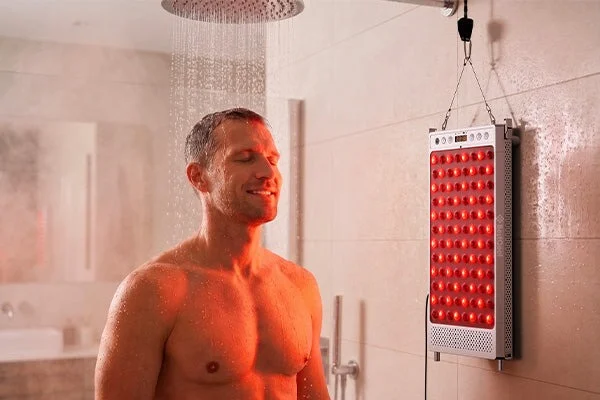
Saunas and red light devices spent decades on separate wellness tracks. One evolved around Nordic tradition and cardiovascular research; the other grew out of laser and LED biology in clinical labs. In the last few years the two categories have started to converge, mostly because users noticed that they were often doing one modality shortly before or after the other and asked the obvious question: could they be combined into a single session? The answer is yes, but the equipment question is where most people stumble. Standard red light panels are not built for temperatures north of one hundred fifty degrees or for the humidity levels that a steam-adjacent environment produces.
This piece is written for the sauna owner who already runs a home unit and wants to add photobiomodulation without buying a second dedicated room. The specific issue is engineering, not biology. A well-built purpose-designed sauna light survives the environment; a repurposed indoor panel corrodes, warps, or fails outright. Understanding what separates the two categories, and why the distinction matters for both safety and effect, is the fastest path to a combined protocol that actually holds up over years of use rather than months.
Why Standard Panels Fail in a Sauna Environment
The inside of a running sauna is a hostile environment for consumer electronics. Air temperatures routinely sit between one hundred fifty and one hundred ninety degrees Fahrenheit. Wood surfaces radiate heat. Users pour water on hot stones, generating brief but intense humidity spikes that condense on any cooler surface in the room. Standard panels are engineered for room temperature and dry ambient conditions, and every layer of that engineering fails under sauna conditions in a slightly different way.
The correct approach is a device engineered for the environment from the ground up. A dedicated Sauna Red Light Therapy unit uses sealed housings with high-temperature-rated gaskets, IP-rated waterproofing that can survive both immersion-adjacent humidity and direct water contact, and driver electronics selected for elevated ambient temperature operation. These are not decorative differences. They are the reason one device runs for years in a working sauna while another begins failing within weeks of installation.
Thermal Ratings on the Driver, Not Just the Housing
The failure point in most standard panels installed in saunas is not the LED array. It is the driver electronics on the back of the panel that step down household voltage to what the LEDs need. Standard drivers are rated for ambient temperatures well below the sauna operating range, and they enter thermal shutdown or degrade permanently when pushed past their spec. Sauna-rated devices use drivers selected for high ambient operating temperatures, which is a specification worth verifying explicitly rather than inferring from the marketing.
Humidity, Water Contact, and IP Ratings
The IP rating system uses two digits. The first describes protection against solid objects; the second describes protection against water. A device rated IP65 tolerates dust ingress and low-pressure water jets from any direction, which covers essentially every scenario a sauna user can produce short of full immersion. Devices with lower ratings, or with ratings only on paper without matching seal quality, invite the exact failures the environment guarantees. Verifying the IP rating on the actual product page, and looking for matching gasket detail in photos, distinguishes serious sauna lights from panels that just added “waterproof” to the marketing copy.
The Biological Case for Stacking the Two Modalities
Beyond the equipment question sits a more interesting question about whether combining sauna heat with red light exposure actually produces additive or complementary effects. The research base is younger than either modality on its own, but the mechanistic reasoning is coherent enough to be worth understanding.
Vasodilation and Photon Delivery
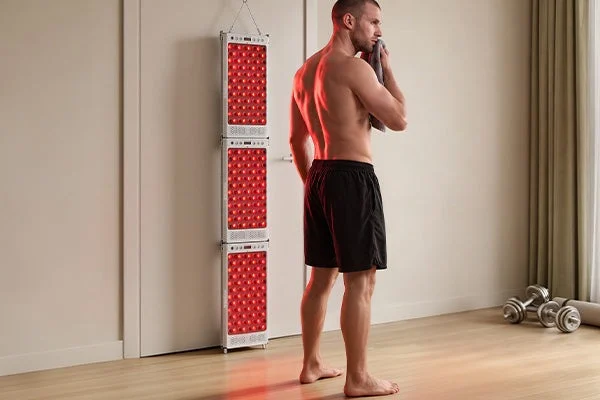
Sauna exposure drives peripheral vasodilation as the body dumps heat through the skin. That vasodilation increases surface blood flow substantially, which changes the tissue environment the red light encounters when the two are combined. The practical implication is that light-driven nitric oxide release stacks with sauna-driven vasodilation rather than duplicating it, and the combined session may produce circulatory effects that neither modality reaches on its own. The mechanistic case is not fully closed, but the direction of the interaction is at least plausible enough to justify the format.
Heat Shock Proteins and the Repair Signal
Sauna heat triggers heat shock protein expression, part of the cellular stress response that supports protein folding, damage repair, and adaptive resilience. Red light exposure activates a partially overlapping but distinct set of signaling pathways centered on mitochondrial function and gene expression. Running both signals in the same session may produce a combined transcriptional response that is broader than either alone. Users often describe the subjective effect as feeling more recovered from a combined session than from either modality separately, which is consistent with a broader repair signal even if the mechanism is not fully mapped.
Session Structure That Respects Both Doses
Both modalities have dose-response relationships that punish overdoing them. A useful protocol targets moderate exposure to each rather than maximal exposure to both simultaneously. A sauna session in the fifteen to twenty minute range, with red light delivered during that same window at working distance from the installed panel, produces the combined effect without pushing either variable past its useful zone. Longer combined sessions increase the chance of thermal stress that undercuts the benefit the protocol is meant to deliver.
Practical Installation and Session Planning
Once the device question is settled, the remaining work is installation and protocol. Both are straightforward when approached with the environment in mind, and both go wrong quickly when standard-panel assumptions are carried over into the sauna context.
Mounting Position for Combined Sessions
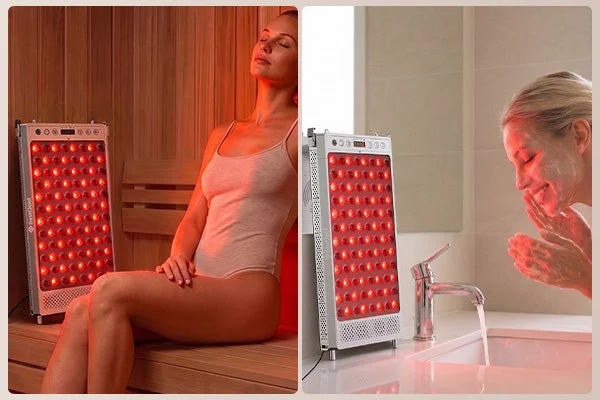
The typical sauna bench arrangement puts users at approximately the same height across the width of the room. Mounting the panel on the wall opposite the primary seating position, at a height that lines up with the seated user’s torso, gives clean exposure without requiring awkward posture. Corner mounts extend the exposure zone across more of the bench. Ceiling mounts serve users who lie down during longer sauna sessions but require careful cable management given the environment’s constraints.
Wiring, Power, and Safety Considerations
Sauna wiring is subject to code requirements around GFCI protection and heat-rated cabling. A retrofit installation should route through wiring rated for the ambient temperature range, with the driver electronics either enclosed in the sealed housing of the device or mounted outside the sauna cabin where they run at normal room temperature. Skipping the wiring code is a fire risk that neither the sauna nor the light was designed to introduce, and a purpose-built sauna light will typically ship with installation guidance that addresses these details explicitly.
Weekly Cadence for Combined Protocols
Three to four combined sessions per week fits comfortably inside the range both modalities support individually. Users occasionally push toward daily combined sessions and report diminishing returns, which is consistent with pushing past the useful zone of the heat exposure component. BestQool designs its waterproof sauna light around the practical case of a user running roughly this cadence, with the equipment specifications sized for years of repeated exposure rather than a marketing photo shoot.
Making the Two Modalities Work Together
Combining sauna heat with red light exposure is one of the more logical stacking combinations in the current wellness landscape. The environmental engineering is the real barrier, not the biology or the protocol, and the solution is a device purpose-built for the conditions rather than a standard panel repurposed hopefully. Sealed housings, high ambient-temperature drivers, IP-rated waterproofing, and installation guidance that treats sauna wiring code as non-optional produce a setup that survives regular use for years. Once the equipment question is answered honestly, the combined protocol is straightforward: moderate session lengths, three or four times per week, with the panel positioned to reach the primary seating area at working distance. The subjective effect most users describe is faster and more thorough recovery than either modality produced separately, and the biological case for that outcome is plausible enough to justify the investment in doing it right the first time.
