
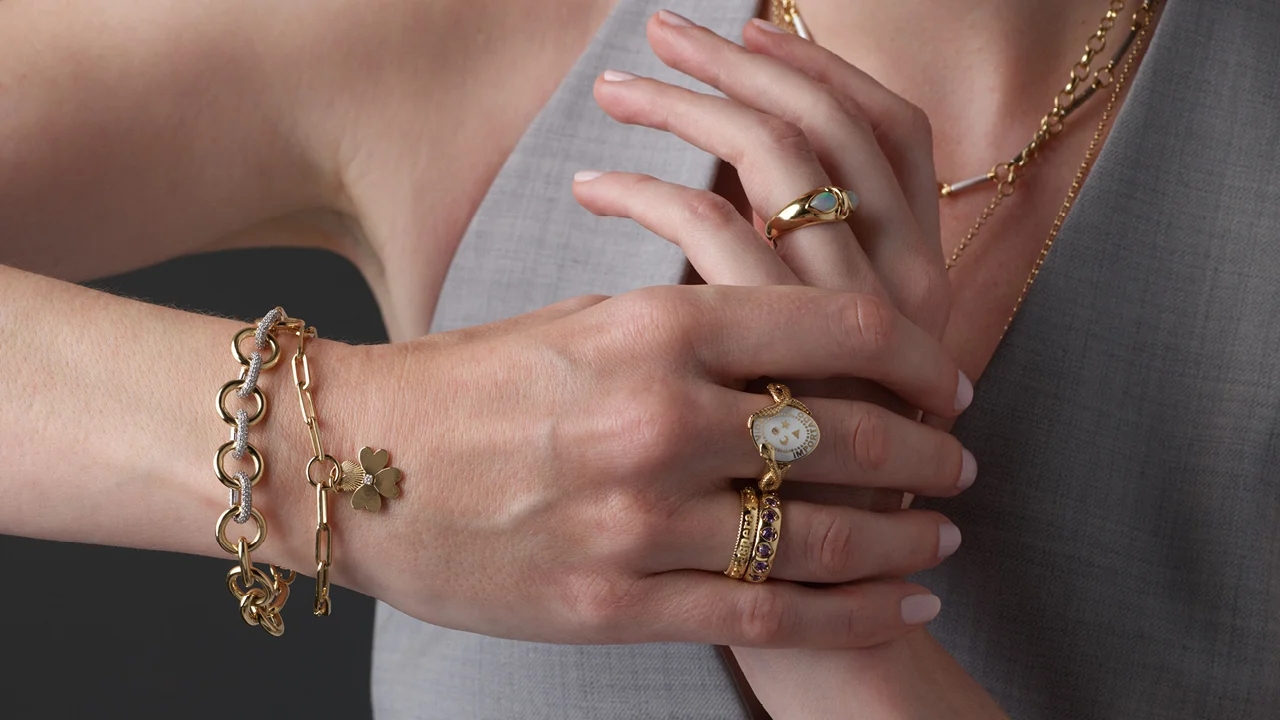
Mixed-material rings and symbolic jewelry ask for a different kind of care from a plain metal chain. A single piece may combine metal details, cord, beads, stone, wood, or a surface finish. The difficulty is not finding a stronger cleaner; it is avoiding a treatment that helps one component while affecting the one beside it.
A careful routine begins with restraint. Treat the whole piece according to its most sensitive component, use dry cleaning as the default, and follow any care guidance supplied by its maker. This keeps attention on the construction in front of you rather than on a generic jewelry routine.
Identify the sensitive part
Before cleaning, inspect the entire piece in good light. Look beyond the most visible bead, ring surface, or metal charm. Check cords, knots, drilled holes, glued areas, coatings, small spacers, and any point where different materials meet.
Wood, cord, woven elements, and some surface finishes may be less forgiving than a solid metal part. They can hold moisture or show wear in places that are hard to see. Treating a mixed piece as though it were only metal can leave residue in knotwork or affect materials that were never meant to be soaked.
When materials are uncertain, choose the gentler path. Do not try to identify a stone or infer a treatment from appearance alone. A maker’s instructions, if available, take priority because they apply to that particular construction.
Keep routine cleaning dry
For ordinary care, start with a clean microfiber cloth and a soft, dry brush. Wipe accessible surfaces lightly, then use the brush around clasps, bead gaps, ring settings, and knots where dust gathers. This removes ordinary buildup without driving liquid into holes or fibers.
Avoid soaking a mixed piece by default. Water and cleaning solutions can travel into cord, bead holes, and joins even when the surface looks dry soon afterward. An aggressive scrub can also rub a finish, pull at a knot, or press grit against a softer component.
When comparing Buddha Auras‘ Tibetan ring collection, use the stated materials, construction details, and care guidance as the starting point. A ring or symbolic piece does not need a universal care routine; it needs one that respects the details that are actually listed for it.
Limit friction and daily buildup
Wear creates its own kind of cleaning problem. Friction against a desk, bag strap, or other jewelry can abrade a finish and stress a cord or join. Lotions, perfume, sunscreen, and sweat can leave a film or collect around small details, which is another reason to keep routine care simple.
Put jewelry on after personal-care products have dried, and take it off before exercise, bathing, swimming, or sleep. This does not define a piece as fragile. It reduces avoidable contact with moisture, cosmetics, and repeated rubbing.
- Keep rings, bracelets, and pendants away from rough work surfaces and loose items in a bag.
- Remove a pendant before changing clothes if it is likely to catch on fabric.
- Wipe away visible surface moisture with a dry cloth before storing the piece.
Inspect bands, cords, and joins
The small structural parts deserve as much attention as the decorative ones. Check ring bands, cords, knots, wire, clasps, and mount points periodically, especially where a heavier detail hangs or a sharp edge meets a thread. A loose join, visible fraying, or a clasp that no longer closes securely is a reason to pause rather than keep wearing the piece.
Stop wearing a piece with a weakened cord, loose join, or damaged setting until it has been assessed.
Do not cover a structural problem with glue. If repair is needed, ask the maker or a repair professional who can work with mixed materials and preserve the piece’s construction. A careful repair is preferable to an improvised fix that changes how the components sit together.
Store pieces separately
Storage is the quiet continuation of daily care. Keeping items apart limits the friction that builds up when hard and soft materials touch each other repeatedly. A piece inspected before it goes away is also less likely to return to a drawer with a strained cord or loose clasp.
Place each item in its own soft pouch or separate compartment. Keep clasps closed when possible so they do not catch on cords or fabric. Avoid leaving mixed-material jewelry in a damp bathroom, in direct heat, or loose beside other pieces that can rub against it.
There is no universal chemical recipe for jewelry made from several materials. The useful habits are smaller: identify the vulnerable part, keep the routine dry, limit avoidable contact, inspect the structure, and store each piece with space around it.
